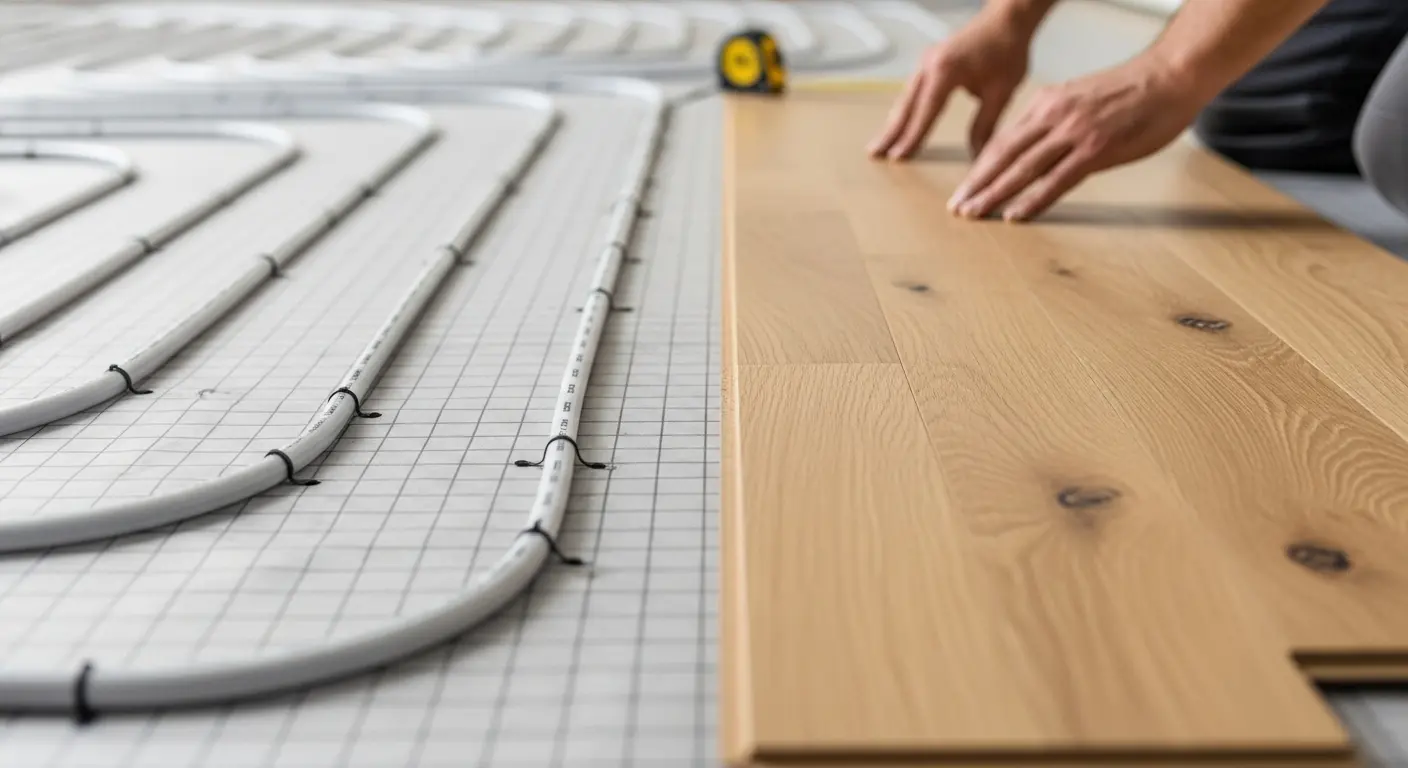
Subfloor Preparation: The Hidden Key to Long-Lasting Flooring
Why proper subfloor preparation is critical before any flooring installation. Moisture testing, levelling, and what happens when corners are cut.
Quick Takeaways
- Subfloor issues cause more flooring failures than product defects
- Moisture testing is essential for all concrete subfloors
- Surface must be flat to within 3mm per 2m straightedge
- Damp-proof membranes may be required for excess moisture
- Cutting corners on preparation leads to expensive failures
The Unseen Foundation
When clients focus on choosing beautiful flooring materials, it's easy to overlook what lies beneath. But experienced flooring installers know the truth: the single biggest factor determining flooring longevity is subfloor preparation.
At Yazco, we've replaced countless floors that failed prematurely - not because the products were defective, but because inadequate preparation doomed them from installation. This guide explains what proper subfloor preparation involves and why it matters.
Types of Subfloor
Concrete/Screed
The most common subfloor in modern UK construction and ground floors generally. Must be:
- Fully cured (new concrete needs months to dry)
- Moisture tested and within acceptable limits
- Flat and smooth, free of ridges and hollows
- Clean of dust, debris, and contaminants
Timber Floorboards
Common in period properties and upper floors. Must be:
- Secure (no loose or bouncy boards)
- Level (may need sanding or ply overlay)
- Free of woodworm or rot
- Adequately ventilated from below
Existing Flooring
Sometimes it's possible to install over existing flooring (tiles, vinyl, etc). This requires:
- Existing floor to be firmly bonded
- Surface to be suitable for new flooring adhesion
- Height build-up to be acceptable (doors, thresholds)
- Any grout lines or texture to be addressed
The Critical Moisture Question
Moisture is the biggest enemy of flooring. Excess moisture in subfloors causes:
- Wood/laminate: Cupping, warping, gaps, buckling
- Vinyl/LVT: Adhesive failure, bubbling, mould growth beneath
- Carpet: Mould, mildew, odours, deterioration of backing
Moisture Testing Methods
Hygrometer Test (Relative Humidity): The most accurate method. A calibrated probe measures the relative humidity within the concrete. British Standards specify maximum 75% RH for most flooring types, though some products require 65% or less.
Calcium Chloride Test: Measures moisture emission rate over time. Less common in UK but specified by some manufacturers.
Electronic Moisture Meters: Quick indication but less accurate. Useful for initial assessment but shouldn't replace proper testing.
What If Moisture Levels Are Too High?
Options include:
Wait: New construction moisture takes months to dry. Sometimes patience is the answer.
Damp Proof Membrane (DPM): Surface-applied liquid or sheet membranes that seal moisture below the flooring. Essential for many situations but adds to the project scope and drying time.
Investigate Source: Rising damp, leaks, or failed existing DPMs need addressing at source. Topical solutions won't fix ongoing moisture ingress.
Levelling and Flatness
British Standards specify tolerances for floor flatness:
- BS 8203 (Resilient flooring): 3mm deviation over 2m straightedge
- BS 8201 (Wood flooring): 3mm deviation over 2m straightedge
These tolerances exist because:
- Bumps create pressure points that wear flooring prematurely
- Hollows cause flexing and potential breaking of joints
- Unevenness prevents proper adhesive contact
- Floating floors will 'bounce' over hollows
Levelling Methods
Self-Levelling Compound: Liquid applied to concrete that flows and self-levels. Modern compounds can achieve perfect surfaces in 2-3mm thickness. Deeper fills require specialist products or multiple applications.
Ply Overlay: For timber subfloors, 6-12mm plywood provides a stable, flat surface. Essential where boards are uneven, gaps exist, or movement occurs.
Grinding/Sanding: High spots can be ground down on concrete or sanded on timber. Often combined with filling low areas.
Common Subfloor Problems and Solutions
Problem: Residue from Old Flooring
Old adhesives, carpet backing, vinyl remnants. These must be removed or properly treated. Solutions include mechanical scraping, diamond grinding, or chemical removal. Some smoothing compounds can encapsulate residues.
Problem: Concrete Dusting
Weak concrete that produces powder when scraped. Caused by poor curing or inadequate mix. Requires sealing with appropriate primers before levelling.
Problem: Cracks
Static cracks can be filled. Moving cracks (structural movement) need addressing at source or accommodating with flexible membranes. Ignoring moving cracks leads to flooring failure at the crack line.
Problem: Failed Heating Screed
Underfloor heating screed that's cracked or separated. May need repair or overlay depending on severity. Heating systems should be commissioned and run before flooring installation.
Why Cutting Corners Never Works
We've seen many examples of preparation shortcuts leading to avoidable failures:
- Wood flooring cupping within months of installation due to un-tested moisture
- LVT bubbling and lifting because adhesive couldn't bond to dusty concrete
- Laminate developing permanent ridges over un-filled grout lines
- Carpet wearing through prematurely over uneven concrete
In each case, the flooring warranty was void due to installation on unsuitable subfloors. The effort and expense of removal, proper preparation, and new flooring far exceeded what preparation would have involved initially.
Your Free Consultation
Subfloor preparation is an essential part of any flooring project and protects your investment:
Preparation requirements depend on the type and extent of work needed - from moisture testing and surface preparation to levelling compound, damp proof membranes, and ply overlays. Some preparation may be included in your fitting quote. For a detailed breakdown tailored to your property, contact Yazco on 020 7224 8876 for a free site assessment and quote.
Conclusion
Proper subfloor preparation isn't glamorous, but it's the foundation of every successful flooring installation. Any reputable flooring company will assess your subfloors before quoting, include appropriate preparation in their scope, and refuse to install on unsuitable surfaces. Always check what's included for preparation - corners cut here will haunt you later.