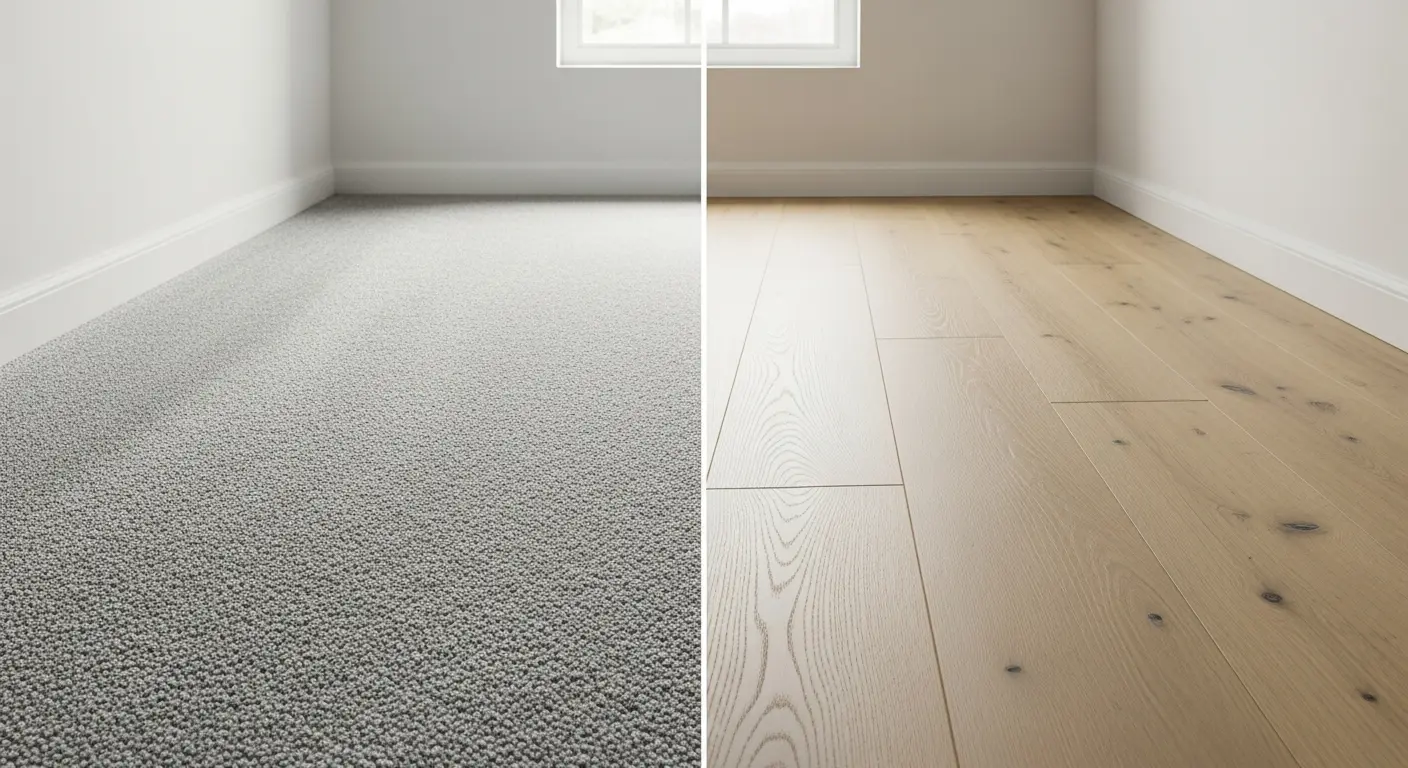
Best Flooring for London Flats: Noise, Lease Rules & Practical Choices
Navigate the unique challenges of flooring a London flat. Sound insulation requirements, lease compliance, and the flooring choices that work best in apartments.

Quick Takeaways
- Always check your lease before choosing flooring - restrictions are common
- Acoustic underlay is usually mandatory, not optional
- Carpet + rubber underlay offers best sound insulation
- LVT is the best hard flooring option for flats due to quiet performance
- Engineered wood requires specific acoustic systems to be lease-compliant
The London Flat Challenge
Flooring a London flat isn't like flooring a house. You're not just making decisions for yourself - you're sharing a building with neighbours above, below, and beside you. Sound travels. Leases have rules. Freeholders have opinions. Getting it wrong can result in formal complaints, required removal, and significant disruption.
As flooring specialists working across London's diverse apartment stock - from Victorian conversions in Islington to new builds in Battersea - we've navigated these challenges thousands of times. Here's what you need to know.
Understanding Lease Restrictions
Before selecting any flooring, obtain your lease and search for:
- References to floor coverings
- Requirements for 'soft floor coverings' or specific carpet coverage percentages
- Acoustic or sound insulation specifications (dB ratings)
- Consent requirements for flooring changes
- Specific prohibitions (e.g., 'no hard flooring in living areas')
Common lease phrases include:
"The leaseholder shall ensure all floors in the demised premises are covered with carpet or other suitable noise-reducing material..."
"Any hard flooring installation requires prior written consent from the freeholder and must achieve minimum 19dB impact sound improvement..."
Sound Insulation Explained
Sound in buildings travels two ways:
Airborne Sound: Voices, music, TV. Addressed primarily through wall and ceiling construction, not flooring.
Impact Sound: Footsteps, dropped objects, furniture movement. This is what flooring choices directly affect.
The Key Metrics
ΔLw (Delta Lw): Laboratory-measured impact sound improvement provided by a floor covering. Higher is better. Typical requirements: 17-21dB.
For example, a quality acoustic underlay might provide ΔLw of 21dB, meaning it reduces impact sound transmission by 21 decibels compared to bare floor.
Building Regulations (Approved Document E) set minimum standards for new-build separating floors. Conversions and existing buildings may have different requirements set by leases or building management.
Flooring Options Ranked for Flat-Friendliness
1. Carpet + Quality Underlay: Best for Sound Insulation
Nothing beats carpet for sound insulation in flats. A thick wool carpet with rubber underlay (e.g., Duralay Durafit 650) can achieve ΔLw of 25-30dB - exceeding any lease requirement.
Best for: Bedrooms, living rooms in converted flats with strict leases
Consider: Wool-blend for durability; solution-dyed synthetics for stain resistance
2. LVT with Acoustic Backing: Best Hard Flooring Option
Luxury vinyl tile is inherently quieter than laminate or wood. Products with integrated acoustic backing (e.g., Karndean Korlok, Quick-Step Livyn) can achieve ΔLw of 17-21dB without additional underlay.
For enhanced performance, adding a specialist vinyl underlay like Parador Akustik-Protect or similar can boost ratings to 21dB+.
Best for: Open-plan living/kitchen areas, bathrooms, hallways
Consider: Rigid-core (SPC) for durability; choose products with EPLF-certified acoustic ratings
3. Engineered Wood with Acoustic System: Premium with Caveats
Engineered wood can work in flats but requires careful system specification. A floating installation on quality acoustic underlay is essential. Some systems to consider:
- Elastlon Sport 12mm (achieves 19dB with most engineered products)
- Timberflex FLoating System (specifically designed for residential flats)
- Acoustic cradle systems for maximum performance (typically used in commercial settings)
Best for: Ground-floor flats, or where lease specifically permits with acoustic compliance
Avoid: Solid wood (expansion noise issues), thin underlays (insufficient sound reduction)
4. Laminate: Proceed with Caution
Laminate is the most problematic flooring for flats. Its rigid HDF core and hollow sound are notorious for transmitting impact noise. Even with quality underlay, achieving consistent 19dB+ ratings is difficult.
Some modern 'quiet' laminates incorporate cork or foam backing. These can work, but always request certified acoustic test data before committing.
Consider only: With premium acoustic underlay and freeholder consent
Avoid: In upper-floor flats with strict leases; directly above bedrooms in floors below
Practical Tips for London Flat Flooring
Getting Freeholder Consent
When applying for flooring consent, provide:
- Product specification sheets including acoustic data
- Underlay specification with ΔLw rating
- Confirmation of professional installation
- Installation plan showing expansion gaps and threshold details
Many freeholders use standard consent forms. Some charge administration fees. Allow 2-4 weeks for consent processing.
Living Room Strategy
Open-plan living is common in London flats. Consider:
- Large rugs over hard flooring to dampen sound in seating areas
- LVT throughout for consistent aesthetics with acoustic backing
- Carpet in 'sitting' areas transitioning to LVT in 'kitchen' zones
Bedroom Flooring
For bedrooms, carpet is almost always the best choice in flats. The comfort and sound insulation outweigh any maintenance concerns. If you prefer hard flooring, ensure rugs cover areas beside beds where footfall is concentrated.
What Happens If You Get It Wrong?
Ignoring lease requirements can result in:
- Formal complaints from neighbours and management company
- Requirement to add rugs or sound-deadening materials
- Enforcement notices requiring removal of flooring
- Requirement to reinstate the original flooring at your own expense
- Disputes affecting future sale of your flat
It's never worth the risk. Check your lease, get consent in writing, and use certified acoustic products.
Conclusion
Choosing flooring for a London flat requires balancing your aesthetic preferences with practical acoustic requirements and legal obligations. Working with a flooring specialist experienced in London flats ensures you select products that meet lease requirements, achieve genuine sound insulation, and are installed correctly. We regularly help clients navigate freeholder applications and can provide the documentation needed for consent.